
Exploring Convenience Store Culture in Korea: A Daily Life Guide for Foreign Residents
For many foreigners who move to South Korea, one of the first surprises is how central convenience stores are to everyday life. In many countries, convenience stores are simply small shops for snacks or emergency purchases. In Korea, however, they function as mini community hubs where you can eat meals, pay bills, send packages, withdraw cash, print documents, and even sit down to relax.
If you recently moved to Korea, understanding convenience store culture can make your daily life much easier. Whether you’re grabbing a late-night meal, paying utilities, or looking for affordable food options, Korean convenience stores provide a level of accessibility that many foreigners quickly come to depend on.
This guide explains how convenience stores work in Korea, what you can buy, how much things cost, cultural tips, and common mistakes foreigners make. It also includes useful Korean phrases and practical advice to help you navigate this essential part of Korean daily life.
Why Convenience Stores Are So Important in Korea
Convenience stores in Korea are everywhere. You can find them in residential neighborhoods, office districts, near subway stations, and even inside apartment complexes. Unlike in many countries, they are typically open 24 hours a day.
The three largest convenience store chains are:
- CU
- GS25
- 7-Eleven
Other chains include Emart24 and Ministop (which has gradually merged into other brands).
Because Korean cities are densely populated and people often work late hours, convenience stores fill an important role. They provide quick meals, essential services, and a safe place where people can stop by at almost any time.
For foreigners adjusting to life in Korea, these stores can become one of the most useful daily resources.
What You Can Buy at Korean Convenience Stores
Ready-to-Eat Meals
One of the biggest differences compared to convenience stores in many other countries is the wide variety of prepared meals available.
Popular meal options include:
- Kimbap (김밥) – Korean rice rolls similar to sushi
- Dosirak (도시락) – Boxed meals with rice, meat, and side dishes
- Triangle kimbap (삼각김밥)
- Instant ramen
- Hot dogs and sausages
- Sandwiches and burgers
Most stores provide microwaves and hot water machines so customers can prepare food immediately.
Drinks and Snacks
Convenience stores carry a wide selection of Korean beverages and snacks.
Common options include:
- Milk drinks and flavored milk
- Fruit juices
- Korean iced coffee
- Energy drinks
- Rice crackers and chips
- Chocolate and candy
Korean iced coffee, often sold in plastic cups with ice already inside, is especially popular.
Daily Necessities
Convenience stores also sell many small household items such as:
- Toothbrushes and toothpaste
- Phone chargers
- Umbrellas
- Basic medicine
- Stationery
While prices are slightly higher than supermarkets, these stores are extremely convenient when you need something quickly.
Typical Cost Breakdown
Prices at convenience stores are generally affordable, especially for quick meals.
| Item | Average Price |
|---|---|
| Triangle Kimbap | 1,200 – 1,800 KRW |
| Instant Ramen | 1,500 – 2,500 KRW |
| Dosirak Lunch Box | 4,000 – 6,000 KRW |
| Sandwich | 2,500 – 4,500 KRW |
| Iced Coffee | 1,500 – 3,000 KRW |
Because of these prices, many students and office workers regularly eat meals from convenience stores.
How to Use a Korean Convenience Store (Step-by-Step)
Step 1: Select Your Food
Browse the refrigerated section for ready-to-eat meals. Most items clearly show expiration dates and heating instructions.
If you’re unsure how something tastes, you can try starting with popular items like tuna triangle kimbap or bulgogi dosirak.
Step 2: Pay at the Counter
Take your items to the cashier. Payment methods commonly accepted include:
- Cash
- Korean debit cards
- Credit cards
- Transportation cards such as T-money
- Mobile payments (Samsung Pay, KakaoPay)
Step 3: Heat Your Food
If your meal requires heating, the cashier will usually ask if you’d like it warmed up.
They may say:
“데워 드릴까요?”
This means: “Would you like me to heat it up?”
After heating, you can use the microwave area or hot water machine.
Step 4: Eat in the Seating Area
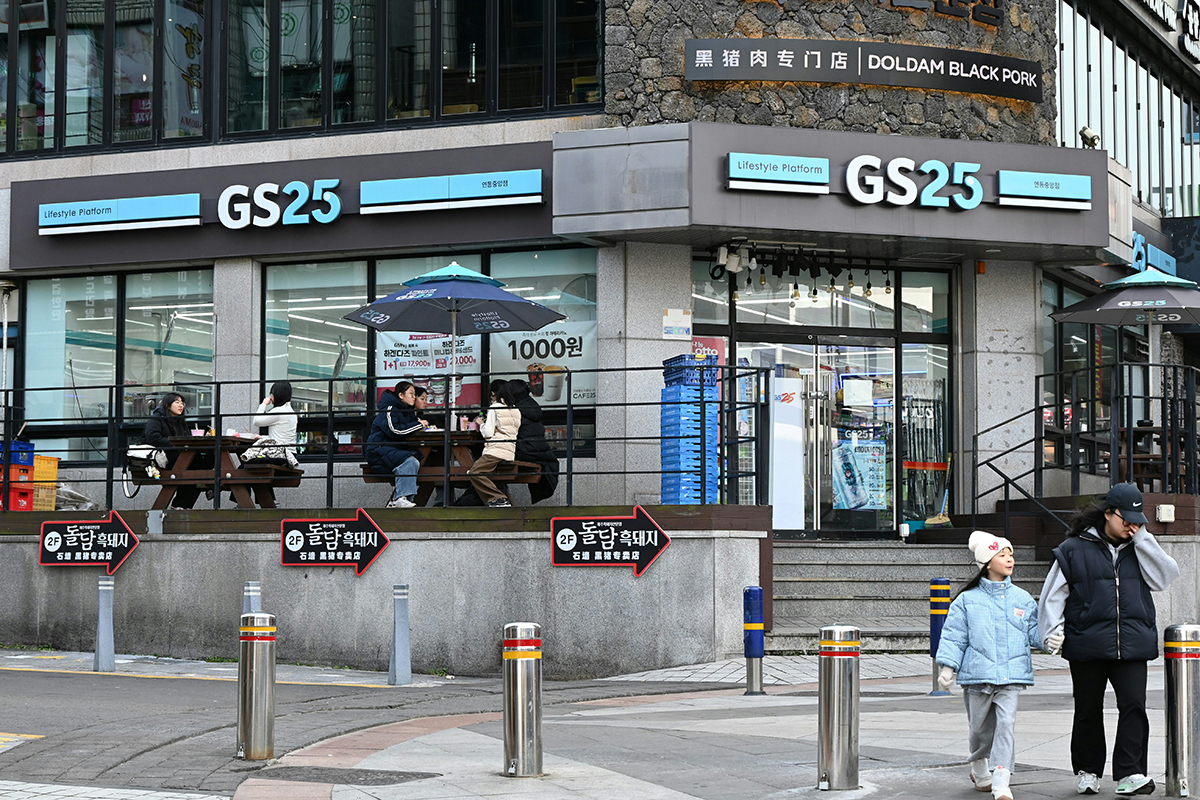
Many Korean convenience stores have small tables where customers can eat. This is particularly common in busy city areas.
Late at night, you might see students studying, office workers eating dinner, or friends chatting over drinks.
Services Available at Korean Convenience Stores
Beyond food, convenience stores offer several important services.
Package Delivery (택배)
You can send packages through convenience store courier systems.
This is often cheaper than visiting a post office. The service usually connects to companies like:
- CJ Logistics
- Hanjin Delivery
- Lotte Global Logistics
You typically use a self-service kiosk to print a shipping label.
Bill Payment
Some stores allow customers to pay bills such as:
- Utility bills
- Mobile phone bills
- Online shopping payments
Foreign residents should still confirm details with the Korea Immigration Service or their local utility provider if payments involve official documents.
ATM and Banking
Many convenience stores have ATMs that support international cards.
However, foreign transaction fees may apply depending on your bank.
Cultural Tips for Using Convenience Stores in Korea
Quiet and Respectful Atmosphere
Korean convenience stores are generally calm environments. Even late at night, customers usually speak quietly.
Loud conversations or disruptive behavior may attract unwanted attention.
Self-Service Etiquette
If you use the microwave or hot water machines, clean the area afterward. Dispose of trash in the designated bins.
Korean customers usually separate trash into categories such as:
- Plastic
- General waste
- Food waste
Alcohol Consumption
It is common in Korea for adults to buy alcohol at convenience stores and drink it outside or at store tables.
Popular options include:
- Soju
- Korean beer
- Makgeolli
However, drinking responsibly and keeping noise levels low is expected.
Useful Korean Words and Phrases
Learning a few basic phrases can make convenience store interactions easier.
- 편의점 (pyeon-ui-jeom) – Convenience store
- 삼각김밥 (samgak kimbap) – Triangle rice ball
- 도시락 (dosirak) – Lunch box meal
- 전자레인지 (jeonjareinji) – Microwave
- 데워 주세요 – Please heat it
- 봉투 필요하세요? – Do you need a bag?
Plastic bags are not always free in Korea, so cashiers may ask if you need one.
Common Mistakes Foreigners Make
Not Checking Expiration Dates
Prepared meals are usually fresh, but expiration times can be strict. Always check the label.
Ignoring Microwave Instructions
Some foods require removing plastic film or opening the package before heating.
Not Separating Trash
Improperly throwing away garbage may frustrate store staff.
Assuming All Stores Offer Seating
Some smaller convenience stores do not have tables.
Using International Cards Without Checking Fees
ATM withdrawals may include additional charges.
Real-Life Scenario: A Typical Late-Night Convenience Store Visit
Imagine you finish work at 10:30 PM and most restaurants are closed. On your walk home, you stop by a GS25 convenience store.
You pick up a bulgogi dosirak and a canned coffee. At the counter, the cashier asks if you’d like the meal heated. After paying, you sit at a small table near the window and eat while watching people pass by outside.
Nearby, two university students are eating ramen and discussing homework. Another customer quietly buys snacks and leaves.
This kind of casual late-night scene is common throughout Korea.
FAQ: Convenience Store Culture in Korea
1. Are Korean convenience stores really open 24 hours?
Most are open 24 hours, but some smaller locations may close late at night depending on staffing.
2. Can foreigners pay with international credit cards?
Yes, most stores accept international Visa or Mastercard payments.
3. Is convenience store food safe to eat regularly?
Yes, food safety standards in Korea are strict, but it is still best to maintain a balanced diet.
4. Can I send international packages from convenience stores?
Most convenience store delivery services handle domestic shipments only.
5. Are there vegetarian options?
Vegetarian choices are limited but improving. Some kimbap varieties and salads may be suitable.
6. Can I sit in a convenience store for a long time?
Short stays are normal, but occupying tables for several hours without buying items may be discouraged.
Final Thoughts: Why Convenience Stores Become Part of Daily Life
For foreigners living in Korea, convenience stores quickly become more than just small shops. They serve as reliable places for quick meals, essential services, and even quiet moments during busy days.
Understanding how these stores operate—from heating meals to using delivery services—can make everyday life in Korea much smoother. Once you become familiar with convenience store culture, you may find yourself stopping by regularly for everything from breakfast coffee to late-night ramen.
In many ways, Korean convenience stores represent the efficiency and accessibility that define modern life in Korea.