
How to Apply for an Alien Registration Card (ARC) in Korea: A Complete Step-by-Step Guide for New Foreign Residents
Moving to Korea is exciting—new food, new language, new routines. But within your first few weeks, one reality hits fast: you can’t do many basic “adult life” tasks smoothly without an Alien Registration Card (ARC). Without it, opening a bank account can be difficult, long-term phone contracts often aren’t possible, and identity verification for everyday online services can become a headache.
This guide explains how to apply for an Alien Registration Card in Korea (often still called the ARC, even though the official term is “Residence Card” in many cases). It’s written for foreigners who just arrived and want clear, practical, lived-in advice—not vague tips. You’ll find step-by-step instructions, real-life scenarios, costs, a preparation checklist, common mistakes, cultural tips, and useful Korean phrases. Official institutions and government portals are mentioned by name (no external links), so you can verify details easily.
What Is an Alien Registration Card (ARC) in Korea?
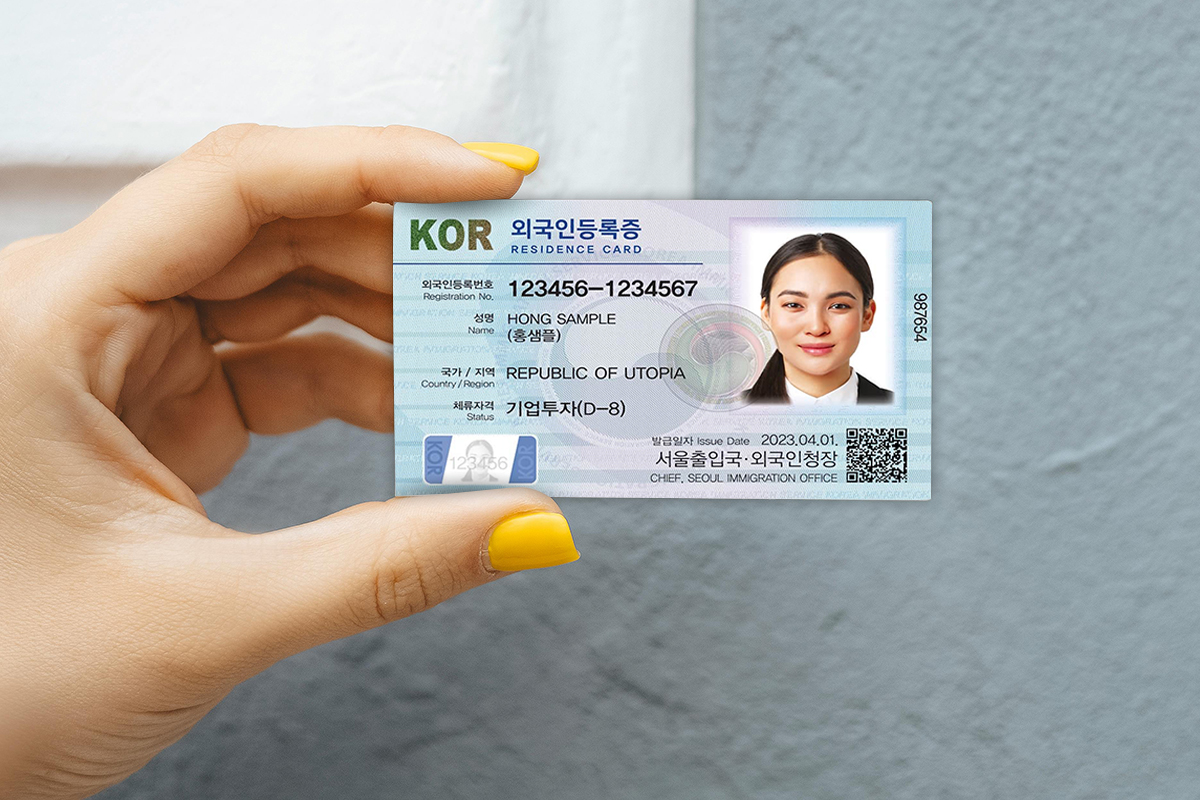
The Alien Registration Card (외국인등록증) is a Korean government-issued ID for foreign nationals staying in Korea for more than 90 days. These days, the card is often referred to as a “Residence Card,” but most foreigners and even many locals still say “ARC.” It’s issued through the Korea Immigration Service (under the Ministry of Justice).
Your ARC typically includes:
- Your full name
- Your Alien Registration Number (a unique ID number used widely for verification)
- Your visa type (for example: D-2 student, E-2 teacher, F-6 spouse, etc.)
- Period of stay (your authorized stay dates)
- Your registered address in Korea
In daily life, your ARC becomes your main ID in Korea. You’ll use it constantly—much more than your passport—so treat it like your “Korea life card.”
Who Needs to Apply for an ARC?
You generally must apply if:
- You plan to stay in Korea for more than 90 days
- You entered Korea on a long-term visa (work, study, family, some working holiday categories, etc.)
- You need to register your address and be recognized in Korea’s administrative system
If you’re a short-term visitor (tourist entry, short-term business, brief study program), you usually won’t apply. The key rule most newcomers should remember is:
If you are in Korea for 90+ days, ARC is essential.
Why the ARC Matters So Much in Real Life
Here’s what many newcomers don’t realize: in Korea, “being here” and “being registered” are two different things. Even if you legally entered and your visa is valid, you may still be blocked from basic services until you’re in the system with an ARC number.
Common situations where the ARC is required or strongly recommended:
- Banking: opening accounts, online banking, and sometimes even simple transfers
- Mobile phone contracts: postpaid plans, phone installment plans, and identity verification
- Healthcare: enrolling in or managing National Health Insurance (depending on status)
- Housing: setting up utilities, proof of residency, some lease-related admin tasks
- Online services: Korean websites that require real-name verification
Real-life example: It’s very common for a newcomer to arrive, get a prepaid SIM, and assume they can “do the ARC later.” Then they try to open a bank account and get told they need an ARC or at least an Alien Registration Number. After that, they try to switch to a long-term phone plan—also requires ARC verification. Suddenly, everything feels stuck until the ARC is handled.
Step-by-Step: How to Apply for an Alien Registration Card in Korea
Step 1: Secure a Korean Address First
You cannot complete the ARC process properly without an address in Korea. Your ARC is tied to your residence, and immigration assigns you to an office based on where you live.
Examples of valid address situations:
- You signed a lease (월세/전세 contract)
- You live in a school dormitory (with dorm confirmation paperwork)
- You live in employer-provided housing (with housing confirmation documents)
Practical tip: If you’re staying in a hotel or Airbnb long-term, the ARC process may become complicated because immigration often expects stable housing documentation. Some people still manage it depending on local office interpretation, but it’s a common source of delays. If possible, secure a lease or official housing confirmation before your appointment date.
Step 2: Make an Appointment via HiKorea
For most applicants, you must reserve a visit through HiKorea, the official immigration portal used for appointments and many immigration services. Immigration offices in Korea are often appointment-based, especially in major cities.
What to do:
- Go to HiKorea (official portal name: HiKorea)
- Find the reservation/appointment section for immigration visits
- Select the service related to alien registration/residence card issuance
- Choose your local immigration office based on your address
- Pick a date/time slot
Appointment reality check: In Seoul and surrounding areas, slots can fill fast. Many foreigners check daily for cancellations—this actually works. If you can’t find something soon, try early mornings or late evenings when cancellations are more likely to appear.
Step 3: Prepare Your Documents (Checklist)
Document requirements vary by visa type, but most ARC applications include a standard set of basics plus visa-specific items.
Basic ARC Application Checklist (Most Common)
- Passport (original)
- Copy of passport photo page
- Copy of visa page (or entry confirmation if applicable)
- One color ID photo (typically 3.5cm x 4.5cm, white background)
- Alien Registration Application Form (available at the immigration office, sometimes downloadable via official portals)
- Proof of residence/address (lease contract copy, dorm confirmation, or housing confirmation)
- Application fee (commonly 30,000 KRW for issuance; confirm based on your case)
- Revenue stamp (수입인지) in many cases (often purchased at or near the office or via designated methods)
Visa-Specific Examples
- D-2 / D-4 (Student): certificate of enrollment, tuition payment proof, sometimes school-issued documents
- E-2 / E-7 (Work): employment contract, employer business registration certificate (사업자등록증), sometimes additional confirmation documents
- F-6 (Marriage/Spouse): marriage-related certificates, spouse’s ID copy, family relationship documentation depending on circumstances
Practical tip: Bring both originals and copies. Some offices have copy machines, but you don’t want to rely on that. A common beginner mistake is showing up with perfect originals but no copies, then scrambling.
Step 4: Visit the Correct Immigration Office
You must apply at the immigration office that has jurisdiction over your registered address. This is a big deal in Korea. Even if another office is closer, they may refuse your application if it doesn’t match your district.
On the day of your appointment:
- Arrive early (10–30 minutes is a safe buffer)
- Bring every document, plus a pen (small but useful)
- Expect a numbered ticket system
Real-life scenario: It’s not unusual to arrive “on time” and still wait 30–90 minutes depending on the day, staffing, and system flow. Plan your day so you’re not rushing to another appointment right after.
Step 5: Submit Biometrics and Pay the Fee
At the immigration office, you’ll typically:
- Submit your documents
- Have your fingerprints taken
- Take a photo (some offices do this digitally; some rely on your submitted photo)
- Pay the issuance fee and/or submit the revenue stamp
Processing time: Often around 2–4 weeks, but it can be longer during busy seasons (spring semester start, fall semester start, peak hiring periods).
Some offices offer delivery options; others require pickup. If delivery is offered, it can be very convenient—especially if your office is far.
ARC Application Cost Breakdown
Costs can vary slightly depending on your situation, but here’s a realistic breakdown many foreigners experience:
- ARC issuance fee: commonly around 30,000 KRW
- ID photo: 10,000–15,000 KRW (photo booth or studio; studios can cost more)
- Printing/copies: 1,000–5,000 KRW
- Transportation: depends on your city and office location
Typical total: around 40,000–60,000 KRW for many applicants (not counting special document issuance costs if you need extra certificates).
Tip: Bring a bit of extra cash or a card that works in Korea. Some small services near offices (printing, photo booths) may prefer cash.
Common Mistakes Foreigners Make (And How to Avoid Them)
Mistake 1: Waiting Too Long to Book the Appointment
Many people arrive and think, “I’ll settle in first.” Then they discover appointments are booked out for weeks. Book early—especially in Seoul, Gyeonggi, and other high-demand regions.
Mistake 2: Showing Up Without the Right Address Proof
Immigration wants documentation that clearly connects you to the address. A vague note or temporary stay situation can cause delays. If you’re in a dorm, ask your school office for the correct dorm confirmation document.
Mistake 3: Bringing the Wrong Photo Size or Background
Korean ID photo standards are strict. Use a photo booth that advertises Korean ID/passport standards, or a professional studio familiar with immigration requirements.
Mistake 4: Not Bringing Copies
Don’t assume the officer will copy for you. Print copies of passports, visa pages, and housing contracts.
Mistake 5: Forgetting to Report Address Changes Later
After you receive your ARC, you must report address changes within a set time window (commonly 14 days). Many foreigners miss this and get fined. Keep it on your life admin checklist if you move.
Cultural Tips: How to Make the Immigration Office Experience Smoother
Be Calm, Polite, and Prepared
Korean bureaucracy tends to be efficient when paperwork is complete. If something is missing, the system often doesn’t “bend”—you’ll just be asked to return. This isn’t personal; it’s procedural.
Dress Neatly (Not Fancy)
You don’t need formal clothing, but looking tidy helps. Immigration offices are official spaces, and presentation matters more than many newcomers expect.
Expect a “System First” Approach
Korea’s administrative culture often prioritizes correct procedure over improvisation. If you politely ask what you need to fix, staff will often tell you clearly—but they may not offer “workarounds.”
Useful polite question: “어떻게 해야 돼요?” (What should I do?)
Useful Korean Words and Phrases for ARC Applications
- 외국인등록증 (oegugin-deungnokjeung) — Alien Registration Card
- 체류카드 (chelyu-kadeu) — Residence card (term often used now)
- 출입국관리사무소 (chul-ip-guk gwanli samuso) — Immigration office
- 예약 (yeyak) — Reservation/appointment
- 신청서 (sincheongseo) — Application form
- 수입인지 (suip-inji) — Revenue stamp
- 주소 (juso) — Address
- 주소 변경 (juso byeongyeong) — Address change
- 처리 기간 (cheori gigan) — Processing period
Helpful phrases you can actually say:
- “외국인등록증 신청하러 왔습니다.” — I’m here to apply for an ARC.
- “예약이 있습니다.” — I have a reservation.
- “이 서류가 맞나요?” — Is this document correct?
- “부족한 서류가 뭐예요?” — What documents are missing?
What to Do After You Receive Your ARC
Once you have your ARC, a lot of daily life becomes easier. Here are the first practical things many foreigners do next:
- Open a bank account (many banks prefer the ARC for full services)
- Switch from prepaid SIM to a postpaid plan if desired
- Set up online identity verification for websites and apps
- Manage health insurance registration depending on your status
Important habit: Keep your ARC number stored safely (not publicly). You’ll need it often for online forms and customer service calls.
Address Changes: What Happens If You Move?
If you move to a new address, you must report it within a set period (commonly 14 days). This can usually be done at:
- A local community service center (주민센터) in your district, or
- Your immigration office, depending on your circumstances
Bring:
- Your ARC
- Your new housing contract (or official housing confirmation)
- Your passport (often helpful as backup ID)
This is one of the most common “quiet fines” foreigners get in Korea—because it’s easy to forget during the chaos of moving.
Common FAQ: Alien Registration Card (ARC) in Korea
1) How long does it take to get the ARC after applying?
Many people receive it within 2–4 weeks, but it can take longer during busy seasons (especially around university semester starts and peak hiring periods).
2) Can I open a bank account before getting my ARC?
Some banks may offer limited services depending on your visa and documents, but many foreigners find the process significantly smoother once they have an ARC. Policies can vary by bank branch.
3) Can I work before my ARC arrives?
If your visa status allows work, you may be legally eligible, but in practice many employers need your ARC number for payroll, insurance, or internal compliance. Clarify with your employer early.
4) What if I can’t find an appointment soon on HiKorea?
Check daily for cancellations and try different times. If you are approaching your deadline, contact your immigration office for guidance. Avoid waiting until the last minute.
5) What happens if I miss the 90-day registration deadline?
You may face a fine. The amount can vary depending on circumstances. If you have a serious reason (medical issue, documented delay), bring proof and explain calmly—don’t assume it will be automatically excused.
6) Do I need to carry my ARC with me all the time?
It’s strongly recommended to carry your official ID in Korea. Many people carry the ARC daily because it’s used for verification in unexpected situations.
7) What should I do if I lose my ARC?
You should report the loss and apply for reissuance at immigration. Bring identification and any required documents. There is typically a reissuance fee, and you may need a police report depending on the situation.
Conclusion: Apply Early, Bring the Right Documents, and Your Korea Life Gets Easier
Applying for an Alien Registration Card in Korea is one of the first major administrative hurdles for new foreign residents. It can feel intimidating—appointments, documents, unfamiliar rules, and sometimes language barriers. But the process becomes manageable when you approach it like a checklist project: secure a stable address, book your HiKorea reservation early, prepare copies, bring the correct photo, and show up calm and organized.
Once your ARC is issued, everyday life becomes dramatically smoother. Banking, phone plans, online verification, and many “normal life” tasks suddenly become possible without constant obstacles. If you’re new to Korea, this is one of those steps that pays off immediately—less stress, fewer delays, and more freedom to focus on settling in and enjoying your new life.
If you take one thing from this guide: don’t wait. Handle your ARC early, and Korea will feel much easier to live in.